Tree Matching When Keeping Unmatched Rows#
Description of the caveat#
As an example, consider the matching tree mentioned here:
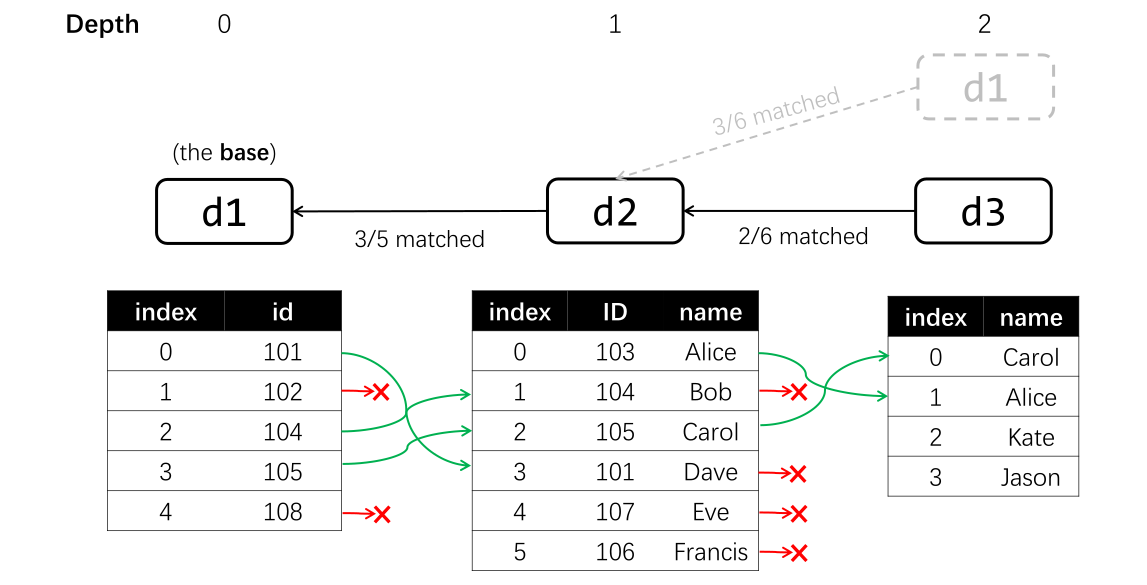
In this example, d3 is not directly matched with d1, and we rely on the records in d2 to match d3 with d1. By default, only instances (in this case, people) that have corresponding rows in all relevant tables (d1, d2, and d3) are kept after merging (d1.merge()). By setting the unmatched argument, we can retain instances that do not have corresponding rows in specific tables.
However, in the matching tree example above, we cannot retain instances that are not recorded in d2, because d2 acts as the intermediary. Even if a person is missing from d2, its information might still be recorded in both d1 and d3. For example, Kate’s ID might be 102, so d1[1] might correspond to the same person as d3[2]. By matching d3 with d1 indirectly through d2 (i.e., d1<-d2<-d3), you implicity require the instance to be present in d2.
General suggestions#
If you wich to retain instances that are missing from some of the matched tables, you may prefer to avoid using the tables as intermediaries. If possible, it can be more straightforward to match all tables directly with the base table, which makes the tree shallower.
Depending on your needs, you can explore different choices for the base table and matching methods to construct a matching tree thet best suits your requirements.